Cleanroom standards evolved from FED-STD-209E to ISO 14644 to enable global standardization of airborne particle classification. FED-STD-209E (particles per cubic foot) was withdrawn in 2001 and replaced in practice by ISO 14644 (particles per cubic meter), which is internationally adopted for cleanroom classification, testing, and monitoring.
Cleanrooms are controlled environments designed to limit airborne particulate contamination to predefined levels. As industries such as aerospace, semiconductors, pharmaceuticals, and medical devices advanced, cleanroom standards also evolved to provide consistent measurement and validation methods worldwide.
Early development of cleanroom standards
Formal cleanroom classification systems emerged in the mid-20th century, driven by the need to protect sensitive processes from particulate contamination. In 1963, the United States introduced Federal Standard 209 (FED-STD-209), which established maximum allowable airborne particle concentrations by particle size. This framework became a widely used reference point across multiple industries for decades.
FED-STD-209E: structure and classification
The final revision, FED-STD-209E, classified cleanrooms by limiting the number of particles ≥ 0.5 µm per cubic foot of air. Typical classes included:
- Class 100: maximum 100 particles ≥ 0.5 µm per cubic foot
- Class 10,000: maximum 10,000 particles ≥ 0.5 µm per cubic foot
FED-STD-209E helped standardize particle-count based classification at a time when contamination control was becoming essential for high-precision manufacturing.
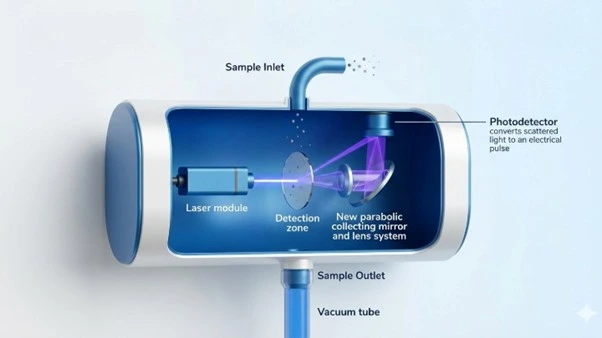
Why FED-STD-209E was withdrawn ?
In 2001, FED-STD-209E was officially withdrawn. The withdrawal was not primarily because the approach was unusable, but because global manufacturing needed international harmonization—a unified system that could be applied consistently across regions and supply chains.
FED-STD-209E also had practical limitations: it used imperial units (cubic feet), and its scope emphasized airborne particles more than a broader cleanroom lifecycle (classification, verification, and ongoing monitoring under internationally aligned frameworks).
Introduction of ISO 14644
To support worldwide consistency, the ISO 14644 series was developed by the International Organization for Standardization (ISO). The core concept in ISO 14644-1 is classification based on:
- Airborne particle concentration per cubic meter (SI units)
- A broader range of particle sizes for classification
- Statistical sampling and verification methods for cleanroom testing
What is ISO 14644 ?
ISO 14644 is an international cleanroom standard that classifies cleanrooms by airborne particle concentration per cubic meter of air. It defines ISO Class 1 (cleanest) through ISO Class 9 and provides a global framework for cleanroom classification, testing, and monitoring.
Timeline of cleanroom standards evolution
- 1963 — FED-STD-209 introduced for airborne particle classification
- 1992 — FED-STD-209E released as the final major revision
- 2001 — FED-STD-209E officially withdrawn
- 1999–Present — ISO 14644 adopted and maintained as the global cleanroom standard series
Key differences between FED-STD-209E and ISO 14644
- FED-STD-209E uses particles per cubic foot; ISO 14644 uses particles per cubic meter
- FED-STD-209E is withdrawn; ISO 14644 remains an active international standard
- ISO 14644 supports broader verification and monitoring practices beyond a single metric view
- ISO 14644 improves global alignment with regulated environments and multinational manufacturing
FED-STD-209E vs ISO 14644 cleanroom classification comparison
| Aspect | FED-STD-209E | ISO 14644 |
|---|---|---|
| Governing body | U.S. Federal Government | International Organization for Standardization (ISO) |
| Measurement unit | Particles per cubic foot | Particles per cubic meter |
| Status | Withdrawn (2001) | Active global standard series |
| Geographic scope | Primarily U.S. | International |
| Primary emphasis | Particle-count based classification | Classification + verification/monitoring framework (series) |
Significance of the transition
The shift from FED-STD-209E to ISO 14644 was a major milestone in cleanroom engineering because it enabled consistent classification across global operations. It also supported cleaner alignment between engineering practice, qualification approaches, and multinational supply chains.
- Consistent cleanroom classification across regions and industries
- More standardized verification approaches and sampling methods
- Better compatibility with regulated environments and quality systems
- Scalability for multinational manufacturing and vendor ecosystems
Modern cleanroom implementation
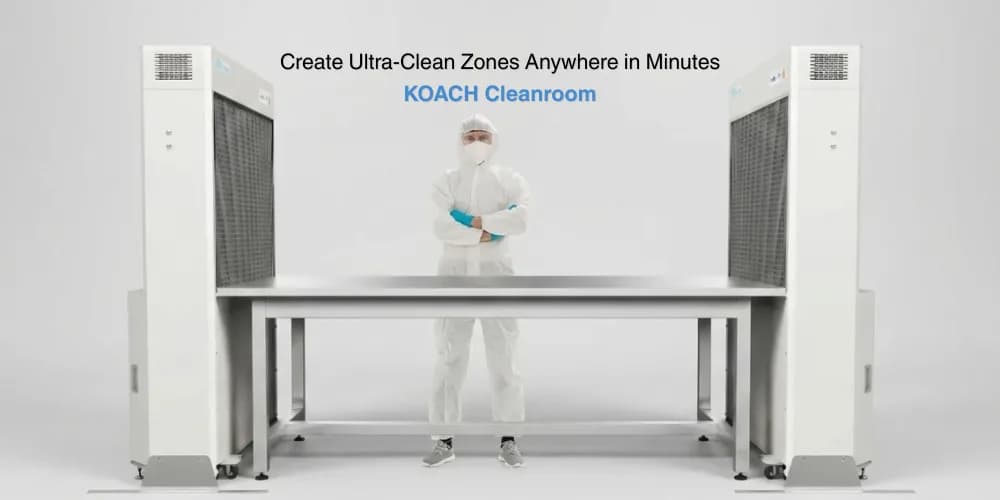
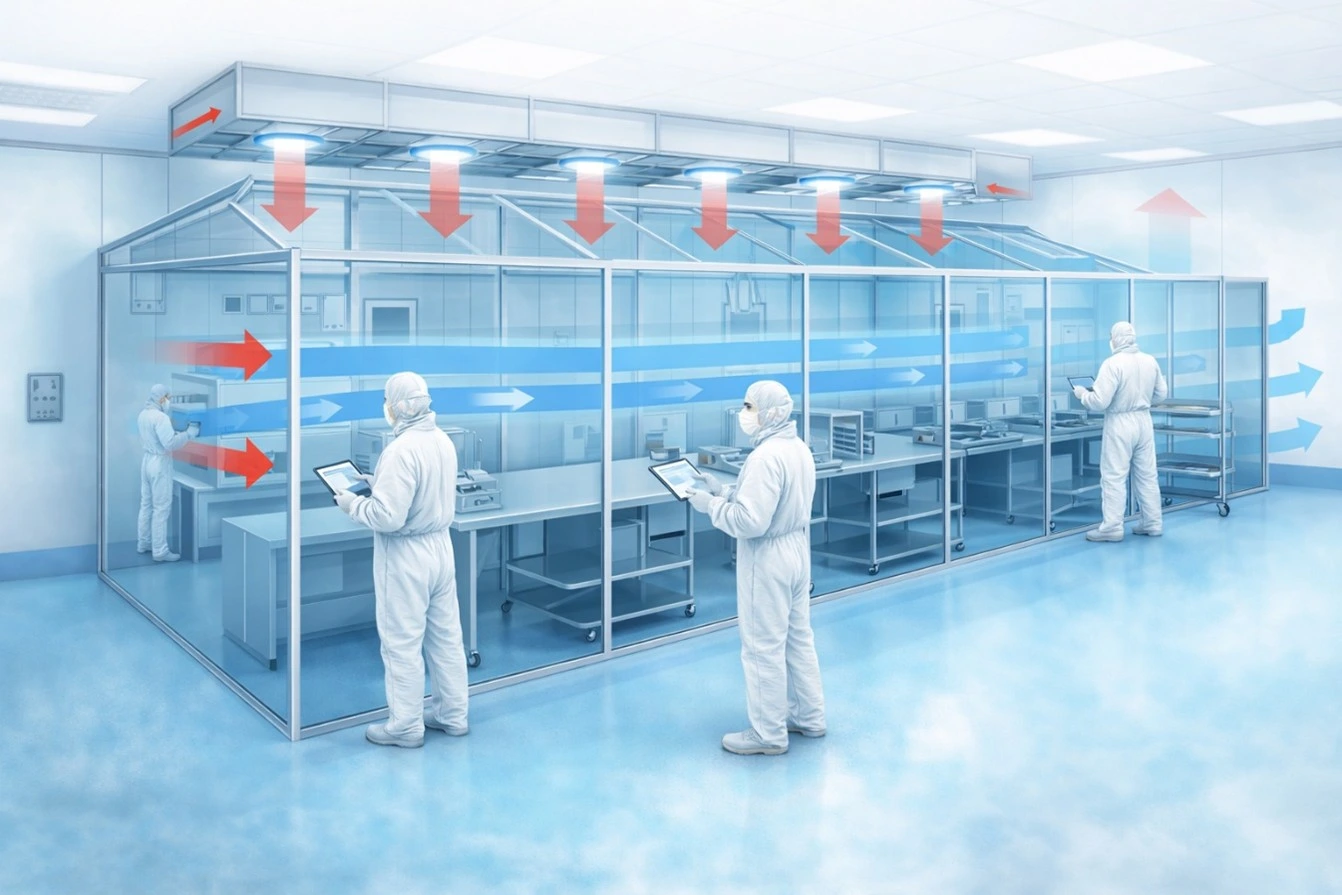
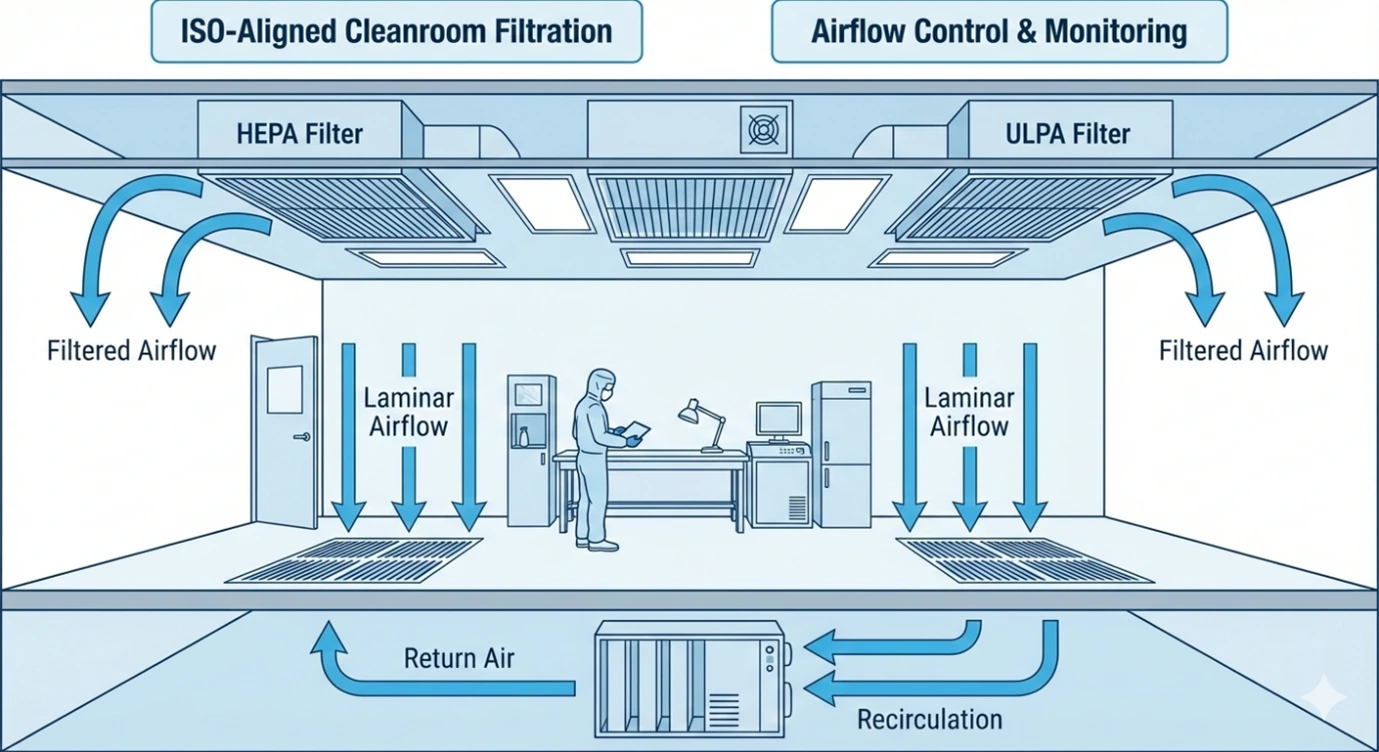
Today, ISO 14644 underpins many modern cleanroom environments. Typical implementations combine controlled airflow, high-efficiency filtration, pressure management, and ongoing monitoring to maintain target cleanliness levels during operation.
References
- ISO 14644-1:2015 — Cleanrooms and associated controlled environments — Part 1: Classification of air cleanliness by particle concentration
- FED-STD-209E — Airborne Particulate Cleanliness Classes in Cleanrooms and Cleanzones
- ISO 14644 — Overview of the ISO cleanroom standards series
- FDA Guidance — Sterile Drug Products Produced by Aseptic Processing (CGMP)