
Quick Answer
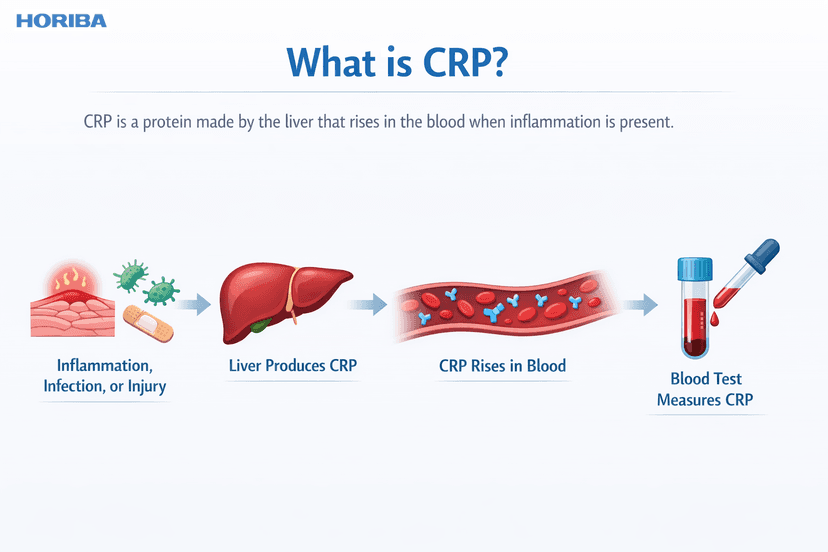
- CRP stands for C-reactive protein, a protein made by the liver when inflammation is present.
- A CRP blood test helps doctors detect and monitor inflammation linked to infection, inflammatory disease, injury, or other medical conditions.
- It is a non-specific marker, which means it indicates inflammation but does not identify the exact cause on its own.
- CRP results are interpreted together with symptoms, medical history, physical examination, and other tests like CBC, ESR, procalcitonin, imaging, cultures etc.
If you are searching for what is CRP test?, what is CRP blood test?, what is CRP?, or what is CRP in medical terms?, the answer is simple: it is a blood test that measures C-reactive protein, a marker that may rise when the body is responding to inflammation.
Doctors commonly use this test to help evaluate infection, monitor inflammatory conditions, and assess whether inflammation is improving or worsening over time. It is useful because CRP can change relatively quickly in response to disease activity, but it is not interpreted in isolation.
What is CRP?
CRP stands for C-reactive protein. It is known as an acute-phase reactant, which means its level can increase quickly when the body is responding to inflammation.
CRP may rise in a wide range of situations, including bacterial infection, inflammatory disease, autoimmune activity, tissue injury, or some chronic medical conditions. Because it responds quickly, doctors often use it as a marker to assess whether inflammation is active and whether it is increasing or decreasing.
CRP may increase in:
- Bacterial infections
- Inflammatory diseases
- Autoimmune conditions
- Tissue injury or trauma
What CRP helps indicate:
- Presence of inflammation
- Severity of inflammatory response
- Change in disease activity over time
- Response to treatment in some cases
What is a CRP Blood Test?
A CRP blood test is a laboratory test that measures the amount of C-reactive protein in your blood. It is usually done with a blood sample collected from a vein and reported in mg/L.
This test is often ordered when a doctor wants to know whether there may be an inflammatory process in the body. It can also be repeated to monitor progress during treatment or recovery.
Why is a CRP Test Done?
A CRP test is commonly used when a doctor wants to detect inflammation, assess infection, monitor inflammatory conditions, or understand whether symptoms may be linked to an active inflammatory response.
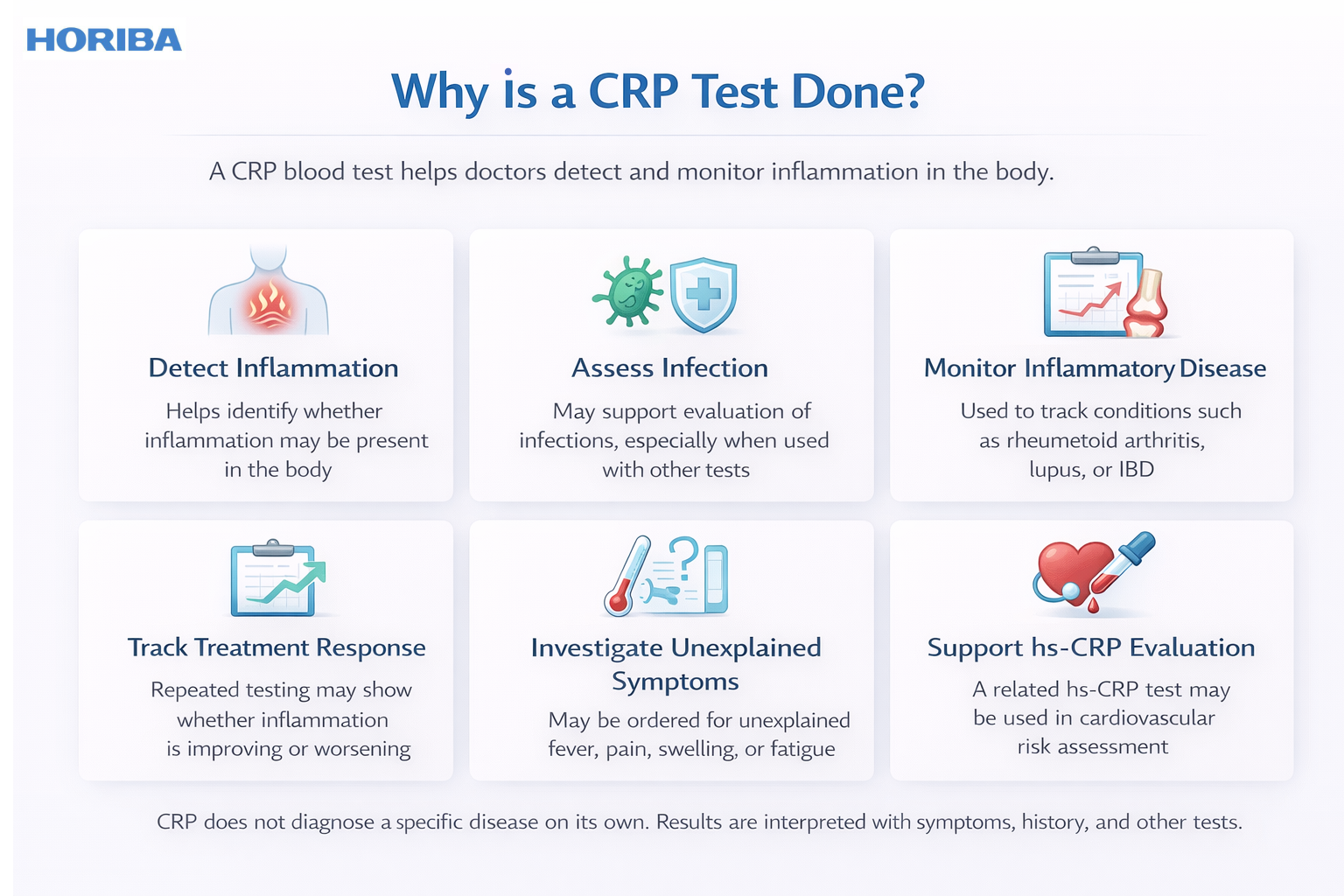
Main reasons a doctor may prescribe a CRP test
- To detect whether inflammation may be present in the body
- To support evaluation of any infection when used with clinical findings and other tests
- To monitor inflammatory diseases such as Rheumatoid Arthritis, Lupus, or Inflammatory Bowel Disease
- To track if inflammation is improving or worsening during treatment
- To investigate unexplained fever, pain, swelling, or fatigue
- To support related assessment through hs-CRP in selected Cardiovascular contexts
What does CRP Mean in Medical Terms?
In medical terms, CRP is a blood marker of inflammation. This means CRP is not a disease by itself. It is a laboratory indicator that may suggest that the body is reacting to infection, inflammation, injury, immune system activity, or certain chronic conditions.
A high CRP result does not automatically point to one specific disease. It tells the doctor that there may be inflammation and that further evaluation may be needed.
What is the Normal CRP Range?
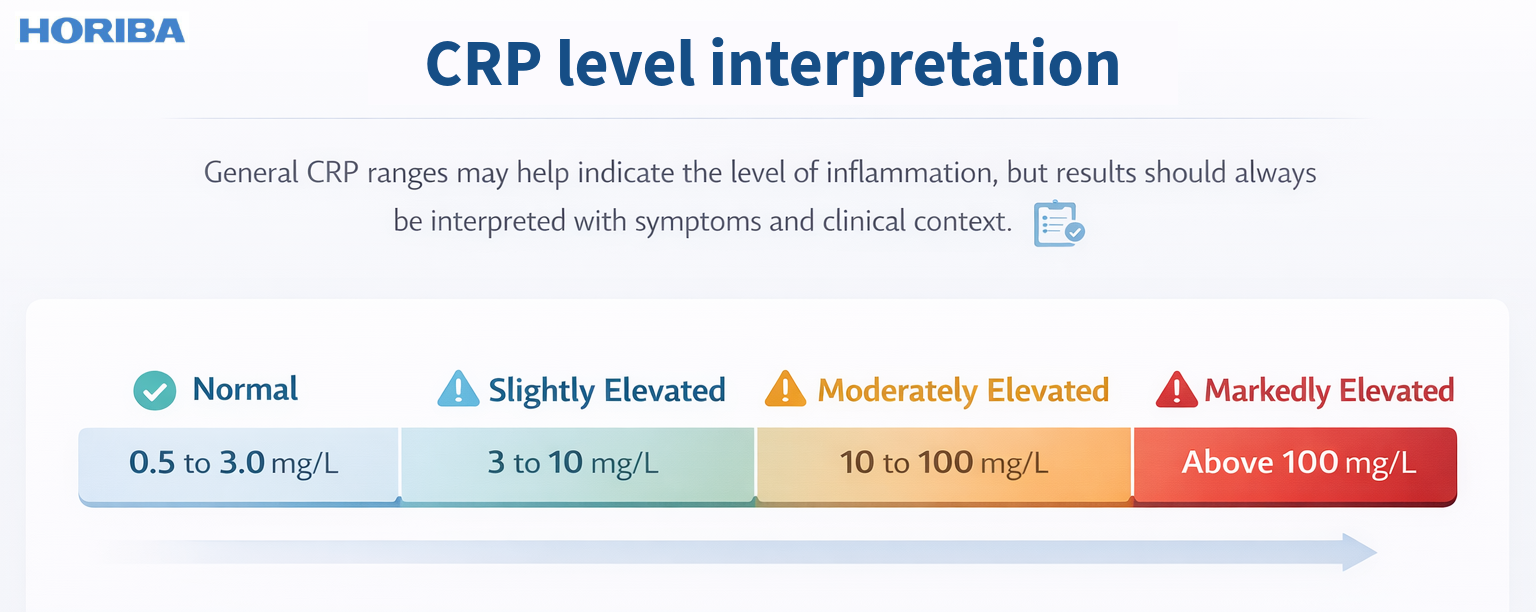
The normal CRP range can vary slightly depending on the laboratory, testing method, and clinical setting. In general, CRP is interpreted using broad reference ranges, while keeping symptoms and medical context in mind.
| CRP Level | General Interpretation |
|---|---|
| 0.5 to 3.0 mg/L | Usually considered normal |
| 3 to 10 mg/L | Slightly elevated |
| 10 to 100 mg/L | Moderately elevated |
| Above 100 mg/L | Markedly elevated |
What does a high CRP level mean?
A high CRP level usually suggests that there is inflammation somewhere in the body. However, the test alone does not identify the exact cause. The meaning depends on how high the value is, what symptoms are present, and what other clinical findings show.
Higher CRP values may be seen in significant infection or stronger inflammatory responses, while mild elevations may occur in less severe or more chronic situations.
Conditions that may increase CRP
Infectious and inflammatory causes
- Bacterial infections
- Fungal infections
- Inflammatory Bowel disease
- Rheumatoid Arthritis
- Lupus
- Osteomyelitis
Other situations where CRP may rise
- Tissue injury or trauma
- Recent surgery
- Obesity
- Smoking-related inflammation
- Some metabolic conditions
- Certain chronic diseases
How is CRP Result interpreted?
Doctors typically interpret CRP by looking at the result together with symptoms, examination findings, medical history, and other investigations. A mild rise can mean something very different from a marked elevation.
CRP is usually interpreted with:
- Symptoms such as fever, pain, swelling, weakness, or fatigue
- Physical examination findings
- Tests such as CBC, ESR, Procalcitonin, Imaging, or Cultures
- Response to treatment over time, if repeat testing is performed
CRP vs hs-CRP: What Is the Difference?
A standard CRP test is mainly used to detect or monitor general inflammation. An hs-CRP test, or high-sensitivity CRP test, measures lower levels of CRP more precisely and is often used in cardiovascular risk assessment in selected patients.
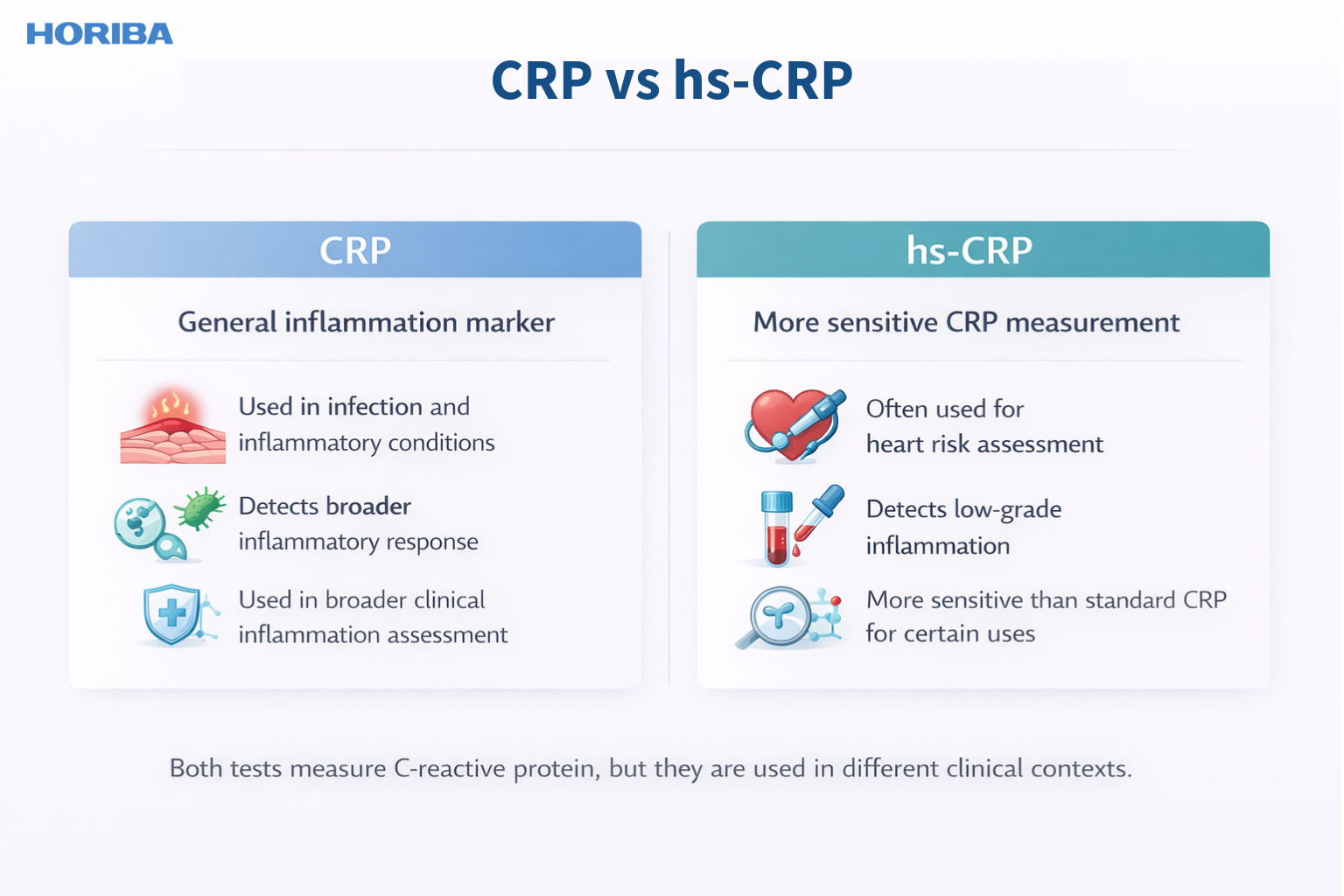
| Test | Main Use | Typical Focus |
|---|---|---|
| CRP | General inflammation detection and monitoring | Infection, inflammatory disease, broader clinical inflammation assessment |
| hs-CRP | More sensitive CRP measurement | Low-grade inflammation and cardiovascular risk assessment in selected cases |
How is the CRP Test Performed?
A CRP test is usually simple and quick. A healthcare professional collects a blood sample from vein, the sample is sent to the laboratory, and the CRP concentration is measured and reported.
Typical steps
- Blood is drawn from vein
- The sample is processed in the laboratory
- CRP concentration is measured
- Results are reviewed in clinical context
When Should you talk to a Doctor about CRP Results?
You should discuss your CRP result with a doctor if the value is above the normal range, if you have fever, pain, swelling, or unexplained weakness, or if you are being monitored for an inflammatory or infectious condition.
A high CRP level is a signal for evaluation. It is not a final diagnosis by itself.
Limitations of the CRP Test
- It does not identify the exact cause of inflammation
- It cannot confirm a diagnosis on its own
- Mild elevations may occur in non-serious conditions
- Normal ranges may vary by laboratory
- Results must always be interpreted in medical context
Frequently Asked Questions
What is CRP test used for?
A CRP test is used to detect and monitor inflammation in the body. Doctors may use it to help assess infections, inflammatory diseases, and response to treatment.
What is CRP in blood test?
In a blood test, CRP refers to C-reactive protein, a substance made by the liver that increases when inflammation is present.
Is CRP a test for infection?
Not exactly. CRP can rise during infection, especially bacterial infection, but it is not specific for infection alone. It may also increase in autoimmune disease, trauma, and other inflammatory states.
What is the normal range of CRP?
A commonly used general reference is 0.5 to 3.0 mg/L as normal, but exact ranges can vary by laboratory and clinical setting.
What happens if CRP is high?
High CRP suggests inflammation in the body. The cause may range from infection to inflammatory disease or other medical conditions, so the result should be reviewed by a qualified healthcare professional.
Is CRP and hs-CRP the same?
They both measure C-reactive protein, but they are used differently. Standard CRP is mainly for general inflammation, while hs-CRP is used for more sensitive low-level measurement, often in cardiovascular risk assessment.
Conclusion
If you are wondering what is a CRP test, the simplest answer is that it is a blood test used to measure inflammation in the body. CRP, or C-reactive protein, is produced by the liver and may rise when the body is responding to infection, injury, or inflammatory disease.
The test is helpful because it gives doctors a fast and useful marker of inflammatory activity. However, it remains a non-specific marker, so CRP results should always be interpreted with symptoms, medical history, and other investigations.